Field report · Australia, New Zealand and ASEAN
Be familiar before you send the first message

Three months, one seller's profile, one retail market. The seller was offering retailers software at an average annual contract value of USD 30,000. The work booked 17 meetings and generated four proposal and quotation requests. Two C-level buyers started the conversation themselves. No cold calls, cold email or ad spend.
- Retail, banking and cybersecurity
- Published August 2026
- 12 minute read
17
Meetings booked in 3 months
USD 30K
Average annual contract value
4
Proposal and quotation requests
0
Cold calls, cold emails, ad spend
The problem
Your best accounts already ignored you once, and you have no way back in
You have 40 target accounts. Your seller messaged the buyer in month one, got nothing, and now that name is dead for the rest of the year. Not because the pitch was wrong. Because the buyer had never seen your seller before and had no reason to spend a minute finding out.
A stranger asking for time is a cost. Someone the buyer already reads is a favour. That is the whole difference, and it is worth more than any sequence rewrite.
- Your seller sends a cold message
- Buyer has never seen the name
- No reply, account burned
- Buyer reads your seller weekly for 12 weeks
- Buyer knows the face and the category
- Buyer replies, or writes first
What the seller stopped doing
- Dialling accounts where nobody had heard the company name.
- Running email sequences at buyers with no reason to reply.
- Paying for reach he could earn from his own profile.
What he did instead
- Worked a hand-built list of 183 accounts, two to five buyers inside each.
- Posted weekly from his own profile, not the company page.
- Put something behind each post the buyer had to ask him for.
Buyers wrote first
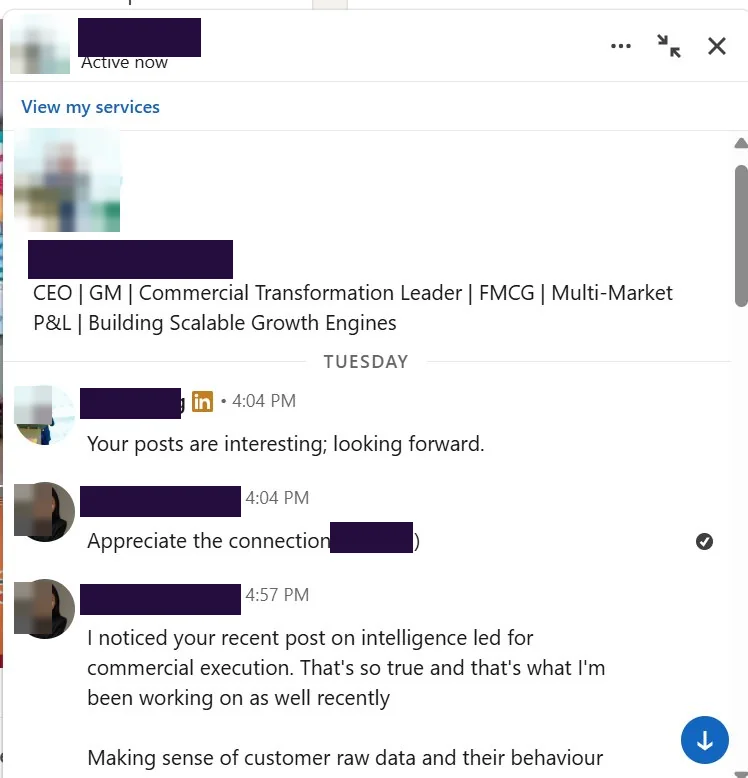
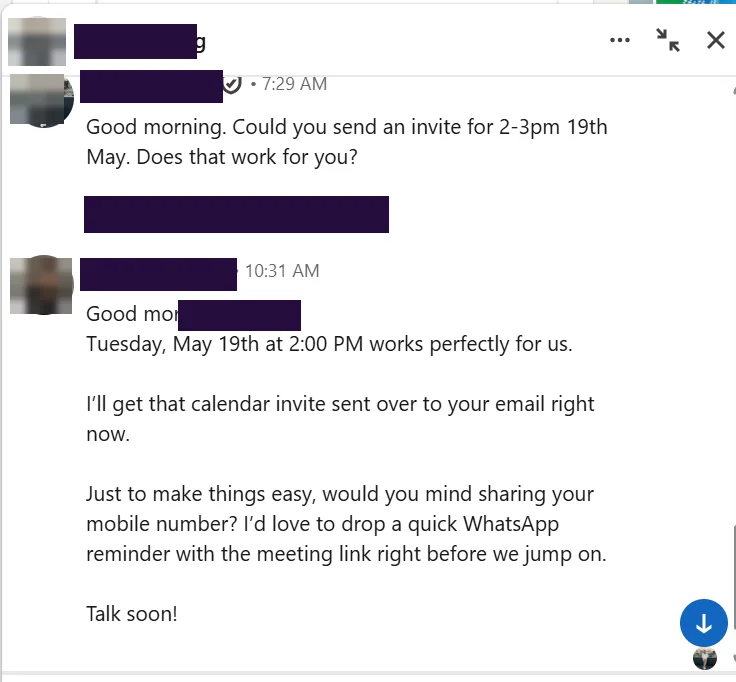
After weeks of reading the seller, two C-level buyers wrote first
Neither of these is a reply to a sequence. In both threads the buyer opened the conversation, because he had been reading the seller for weeks and knew what the call would be about.
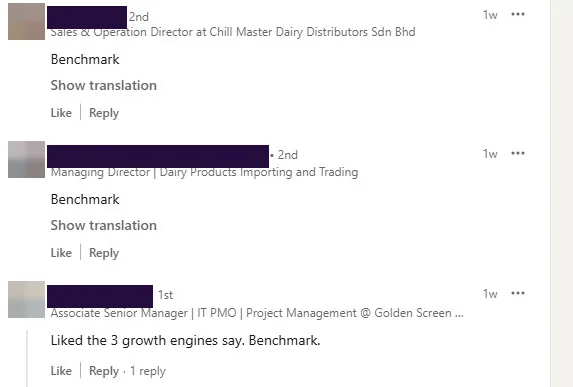
A comment is a name, a title and a company
Comment counts on their own mean nothing to you. Who typed the keyword means everything. Sales and Operations Director. Managing Director. Senior Manager, IT.
Each one is a buyer inside a target account raising a hand, so your seller answers a request instead of opening a cold one. That is the cheapest meeting your team will ever book.
The move
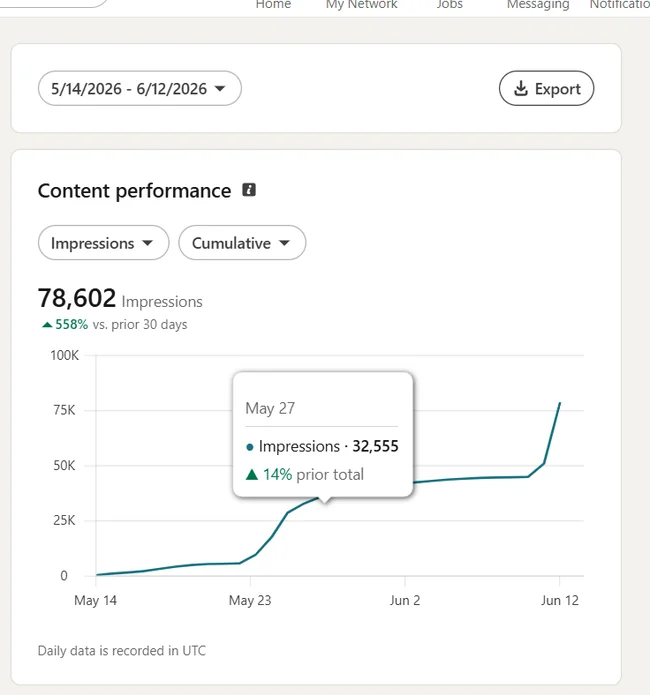
LinkedIn limited the post's reach because the request was typed in the caption
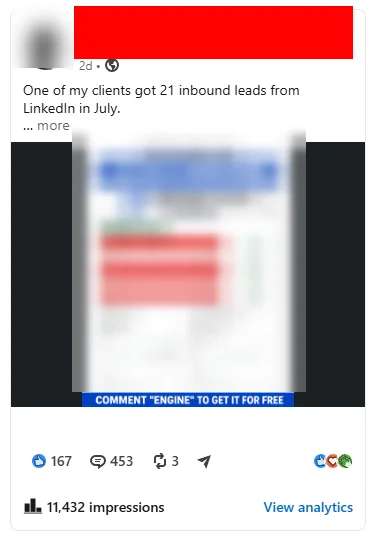
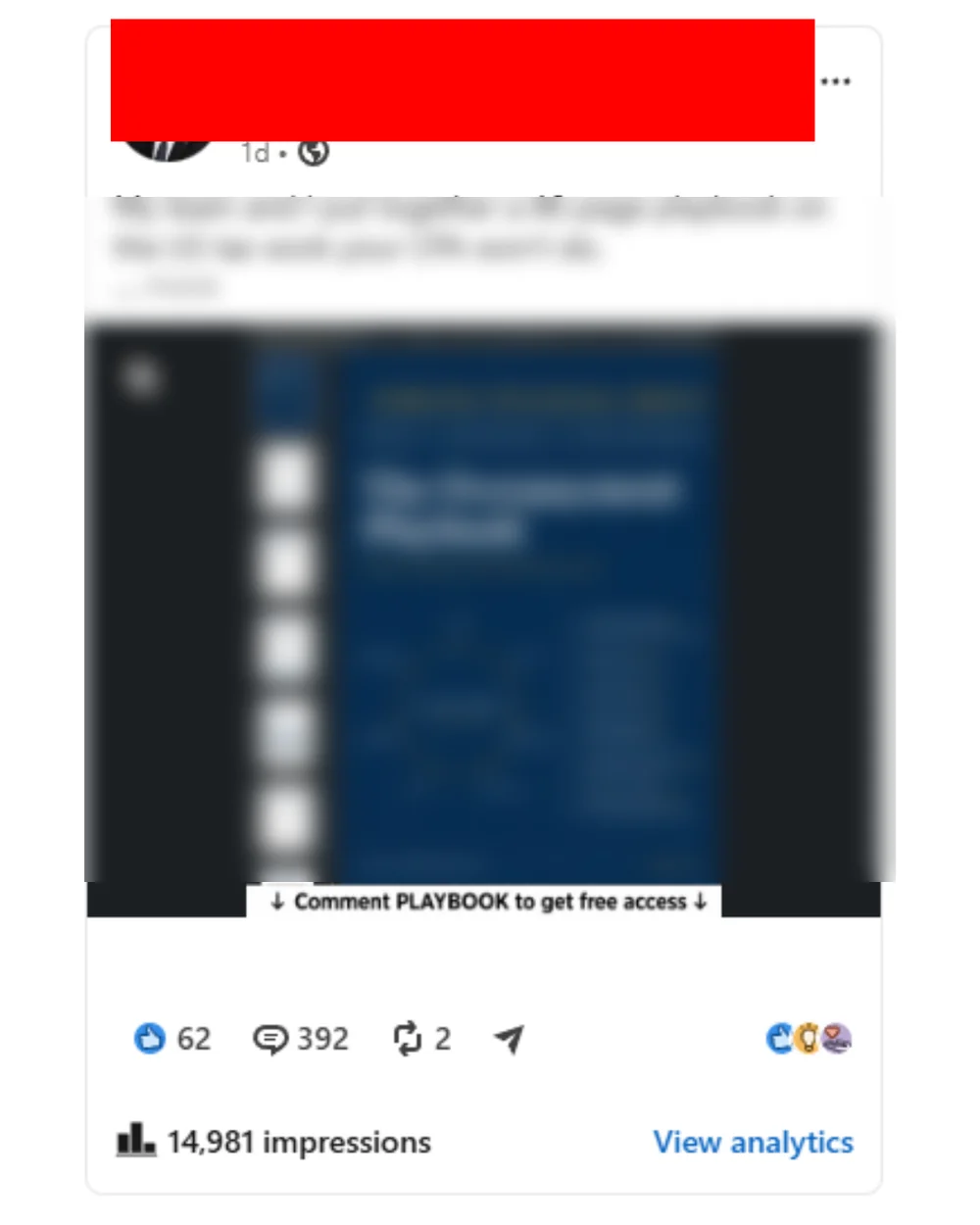
The caption said 'comment KEYWORD and I will send it.' That version stopped at 95 views, so most target buyers never saw it. The next day, the seller moved the same request onto the image. The post reached 11,432 views while giving buyers the same instruction.
- You type the ask in the post
- LinkedIn reads the post text
- Your post stops reaching your accounts
Same post. One day apart. Ask moved onto the image.
3 tests, 3 accountsNothing else changed. Same seller, same copy, same audience, one day apart. Only the position of the ask moved.

Delete these three lines from your posts today
- Comment KEYWORD and I will send it
- Must be connected so I can send it
- Like, comment and repost
Put the ask here instead
- One high-contrast bar on the image, with the keyword on it.
- A first comment from your seller carrying the same instruction.
- A reply that sends the resource and asks one qualifying question.
The engine
Install a system on the seller's profile that keeps target accounts moving
The profile does more than collect views. It helps a named buyer recognise the seller, request something useful, answer a qualifying question and take a meeting when there is a real need. Buyers who are not ready keep seeing the seller instead of disappearing after one sequence.
- 01
Before
A seller the account does not know
After
A familiar category voice in the buyer's feed
- 02
Before
A cold message asking for time
After
A buyer asking for a useful resource
- 03
Before
A name buried in post analytics
After
A qualified reply the seller can act on
- 04
Before
A silent target account
After
A meeting, or a buyer kept warm until timing changes
- 01Name the accountsChoose the companies the seller needs this quarter.
- 02Add the buyersConnect with two to five decision-makers in each account.
- 03Teach from the seller's profilePublish useful category advice under the name that will take the meeting.
- 04Give buyers a reason to replyAttach a useful resource and put the request on the image.
- 05Qualify the replySend the resource, then ask one question that reveals whether the account can buy.
- Meeting or nurture06Book or keep warmOffer the call when the need is real. Keep publishing for buyers whose timing is later.
The list is built by hand
183 accounts went on the list. 55 got worked properly in three months, two to five buyers inside each one.
Most of these companies leave almost nothing online. Software builds the list wrong and nobody notices until the quarter is gone.
It runs on your sellers
Buyers accept a person. They scroll past a company page.
Posts go out from your team's own profiles, so the familiarity belongs to whoever sits on the call.
Where it works
Built in retail. Now running in banking and financial services, and in cybersecurity, across Australia, New Zealand and ASEAN.
One condition: your buyers have to read LinkedIn. If they do not, we say so on the call instead of taking the money.
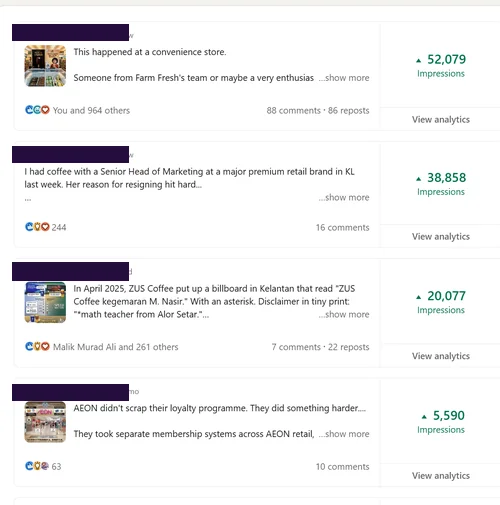
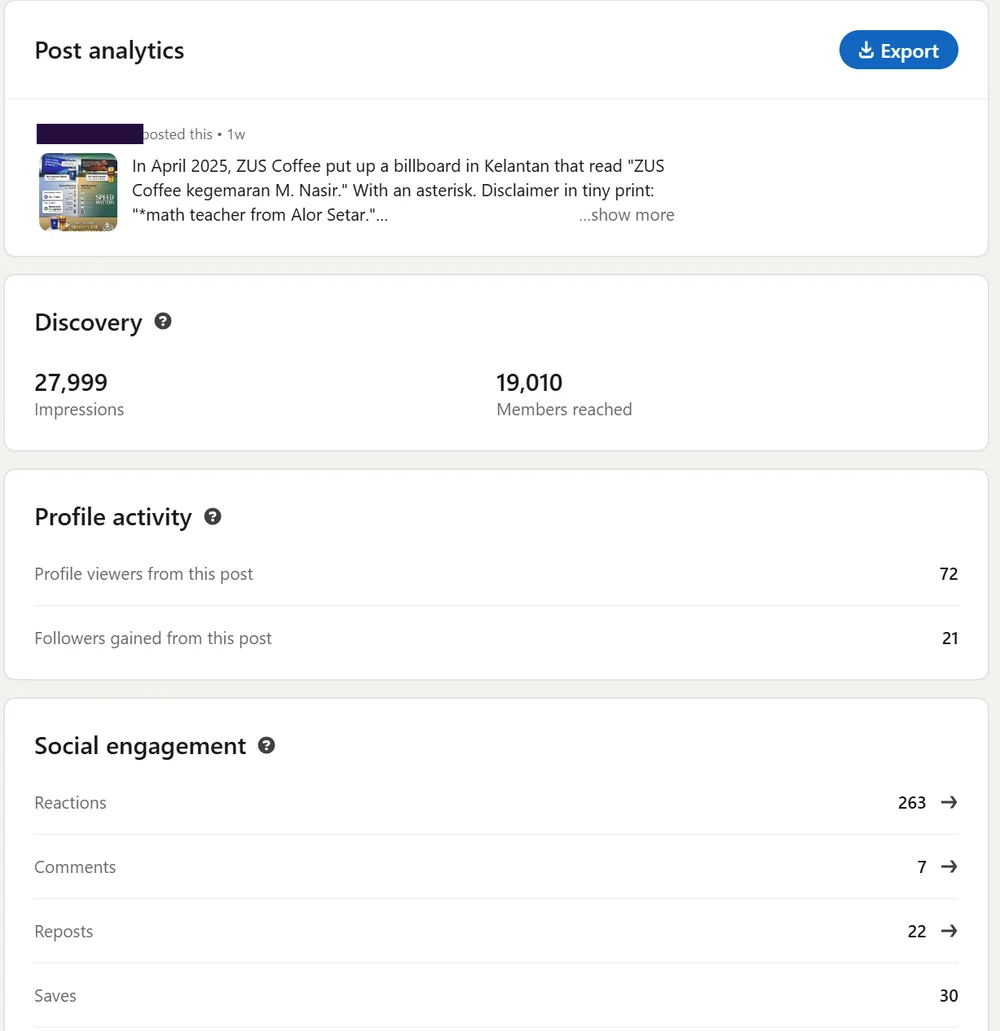
17 meetings
Three months, 17 meetings, one seller's profile
The seller was offering retailers software at an average annual contract value of USD 30,000. The 17 meetings generated four proposal and quotation requests. Company names stay covered, but the buyer titles and company sizes are shown below.
17
Meetings booked, one every 5 to 6 days
USD 30K
Average annual contract value
4
Proposal and quotation requests
0
Cold calls, cold emails or ads
Who took the meetings
| Who took the meeting | Category | Size |
|---|---|---|
| Chief Commercial Officer | Convenience retail | 700 outlets |
| Chief Commercial and Brand Strategy Officer | Sportswear | 60 outlets |
| Chief Merchandising Officer | Grocery | Regional chain |
| Vice President, Sales Operations | Consumer goods group | Supplies every major grocer |
| Head of Group Marketing | Health and wellness | 54 outlets |
| Marketing Manager and Digital Marketing Manager | Specialty retail | 110 outlets, two buyers, one account |
| Assistant General Manager | Pharmacy | 55 outlets |
| Senior Data Engineer | Mass retail | 1,150 outlets |
What the numbers do not show
183 accounts went on the list. Only 55 got worked properly in three months, because a real list is built by hand: the right two to five people inside each company, checked against who signs.
A scraped list looks bigger on a Monday and costs you the quarter.
Four buyers requested a proposal or quotation
The 17 meetings were not treated as the final result. Four buyers moved to a proposal or quotation request for an offer with an average annual contract value of USD 30,000.
Buyers who were interested but not ready kept seeing the seller's weekly posts instead of being pushed into another cold follow-up sequence.
The Closed Circle
Put the same buyer-to-meeting system behind your sales team's profiles
USD 197, paid once. Your team gets the exact sequence, wording and weekly routine that booked 17 meetings against an offer worth USD 30,000 a year per account. It starts with the accounts you want this quarter, builds familiarity through the seller's profile and shows exactly how to handle a buyer who asks for the resource.
- 01Choose the accountsStart with the companies your seller needs this quarter. The guide shows how to check each account and choose the two to five buyers who can move a deal.
- 02Build the buyer networkUse the connection wording from this engagement, then follow the 12-week routine that makes the seller's name familiar before any meeting request is sent.
- 03Build the seller's category positionPlan what the seller publishes each week and what each post should help the buyer understand. The profile becomes a useful source, not a company noticeboard.
- 04Give buyers a reason to replyUse the resource template and image layout that produced the replies in this report. The buyer asks for something useful, which gives the seller a natural opening.
- 05Move from comment to conversationSend the resource, ask the qualifying question and use the meeting line only when the answer shows a real need. Every message is included in order.
- Qualified meeting06Protect the seller's calendarUse five questions to separate interest from buying intent. The result is fewer empty calls and more meetings with accounts that can actually buy.
USD 197
Close one deal from this. At USD 10,000 that is the 197 back about 50 times over.
See what changed in live campaigns each week
- One live test every week, with the numbers before and after.
- What tanked, and the reason we think it tanked.
- Which post produced a meeting this week, and which produced nothing.
- New market notes as we open Australia, New Zealand and ASEAN accounts.
You see the result, what changed and what the sales team should do differently. Client names remain covered, but the useful numbers and lessons stay intact.
Join the first release
Waitlist gets first access at USD 197.
Add your name and work email. We will send the access link when the first release is ready.
Questions
What sellers ask us about this
Next step
Want this running on your sellers' profiles?
Bring one market and one account list. On the call we tell you whether your buyers read LinkedIn, and what the first 60 days would look like if they do.